
ADاشتہار / AdvertisementGoogle Ad
PM Shehbaz to visit Russia, Iran back-to-back from Nov 30Pakistan
The prime minister will spend three days in Moscow at President Putin’s invitation before flying directly to Tehran for the two-day 18th ECO summit starting on 3 December.

Share:
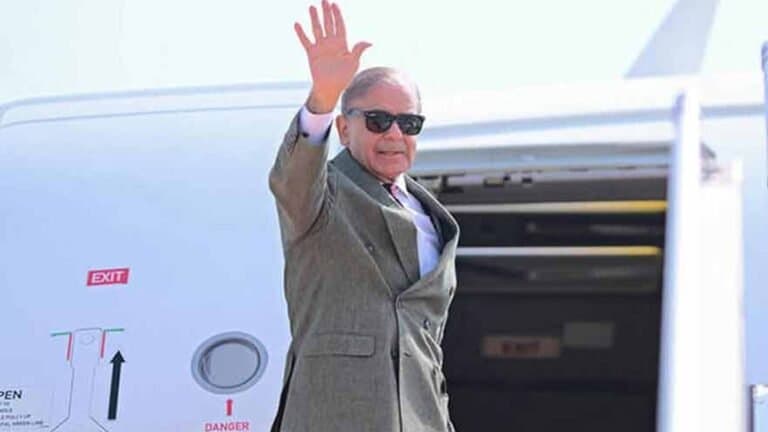
Prime Minister Shehbaz Sharif will undertake back-to-back visits to Russia and Iran starting Monday, 30 November, first spending three days in Moscow before flying directly to Tehran for the 18th Economic Cooperation Organisation (ECO) summit, according to The News and Dawn.
The prime minister will proceed to Moscow for a three-day stay at the invitation of Russian President Vladimir Putin, before travelling to Tehran to represent Pakistan at the ECO summit, which begins in the Iranian capital on 3 December and runs for two days.
ADاشتہار / AdvertisementGoogle Ad
During the Moscow leg, Prime Minister Shehbaz is expected to hold a bilateral meeting with President Putin. According to sources, he will extend a formal invitation to the Russian president for a maiden visit to Pakistan next year, for the Shanghai Cooperation Organisation heads of state summit scheduled to take place in Islamabad next September.
Discussions in Moscow are expected to focus on energy cooperation, defence, trade, regional security and investment, a source in the Prime Minister’s Office told Dawn. The revival of Pakistan Steel Mills, which was established with Russian assistance, is expected to feature prominently in the talks, along with potential Russian investment in Pakistan’s oil and gas sectors.
Ahead of the visit, the two countries have agreed to hold technical talks on 23 and 24 November to address banking and payment difficulties that have constrained bilateral trade, Business Recorder reported. A high-level Pakistani delegation is due in Moscow for the talks, which follow a Foreign Office request issued on 16 November, according to the report.
The Foreign Office has reiterated that Pakistan aims to forge a long-term, multi-dimensional strategic partnership with Russia spanning trade, energy, culture, defence, security and people-to-people contacts. According to reports, the visit will be only the third by a Pakistani prime minister to Russia at the highest level, after former prime minister Nawaz Sharif’s landmark trip to Moscow in April 1999.
Following his Moscow engagements, Prime Minister Shehbaz will travel to Tehran for the two-day 18th ECO summit beginning on 3 December. The gathering will bring together heads of state and government from the ECO’s 10 member states: Pakistan, Iran, Turkiye, Azerbaijan, Kazakhstan, Kyrgyzstan, Tajikistan, Turkmenistan and Uzbekistan.
While Afghanistan’s membership remains suspended, Kabul has claimed it received an invitation from Tehran to attend, according to reports. Pakistan assumed the ECO’s rotating chairmanship for 2026-2027 from Kazakhstan last week, and diplomatic sources in Tehran confirmed that Pakistan was the first country to officially confirm its participation in the summit.
On the sidelines of the summit, the prime minister is expected to hold bilateral talks with Iranian President Masoud Pezeshkian and invite him to attend the SCO summit in Islamabad, according to WANA news agency. The two leaders are expected to discuss bilateral ties and regional issues.
At the summit, participating leaders are expected to deliberate on the Strategic Goals of Economic Cooperation-2035, regional trade and investment, modernising the ECO Trade Agreement, multimodal transport and energy connectivity, digital technology and climate resilience. According to sources, the summit will prioritise deeper economic integration among the member states, with emphasis on expanded intra-regional trade, transport and transit connectivity, energy cooperation, industrial collaboration and investment.
Related Coverage


