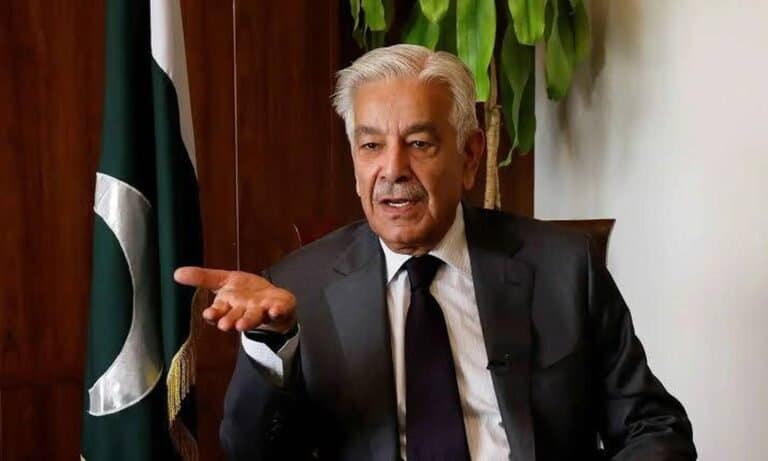


Reacting to a statement by Pakistan Peoples Party (PPP) leader Saeed Ghani, the minister questioned why people should be deprived of their right to express their views on their future and on effective governance. He asked why any decision should be imposed before the public is given an opportunity to express its opinion, adding that a referendum provides a constitutional and democratic platform for seeking the people’s mandate.
Chaudhry said the PPP also advocates the supremacy of democracy and the Constitution, and questioned why the party was reluctant to seek the people’s opinion. He maintained that the essence of democracy lies in making decisions in accordance with the wishes and aspirations of the people, respecting their views and accepting decisions made through public participation.
The minister emphasised that giving priority to public opinion reflects democratic values and is an essential requirement of public politics, Dunya News reported.
The remarks come amid a sharp political debate over the proposal to create new provinces. PPP Chairman Bilawal Bhutto Zardari said at the Karachi Press Club on 17 November that holding a referendum on the issue was unconstitutional, arguing that the Constitution already sets out the procedure for creating new provinces. Interior Minister Mohsin Naqvi has proposed a referendum to settle the matter, saying the people should have the final say, while Federal Minister Rana Sanaullah has said parliament will decide whether a referendum is held.
Under the Constitution, a referendum on a matter of national importance can be held after approval by a joint sitting of parliament, under Article 48(6). However, a referendum on its own would not create a new province: any amendment altering a province’s boundaries must also be passed by two-thirds of the total membership of the affected provincial assembly, under Article 239(4).
Chaudhry had earlier stressed, in remarks on a private television programme on 13 November, that parliament and the provincial assemblies could not be bypassed in the process of creating new provinces, and called for a national consensus built through debate in parliament, the cabinet and among political parties. His latest remarks are consistent with that position: a referendum, in his view, gauges the public will, while the final decision rests with parliament and the provincial assemblies.
The debate over new provinces began in July, when Naqvi called for additional administrative units as part of a broader overhaul of the governance system, and has gathered pace in recent weeks, with the MQM-P demanding a referendum in December and several federal ministers and opposition leaders weighing in.