


ADاشتہار / AdvertisementGoogle Ad
Govt Allows Houbara Bustard HuntingPakistan
Punjab has approved a temporary move of the Houbara bustard to the First Schedule of the wildlife law, allowing regulated hunting during the approved period.
Share:
The Punjab government has approved a temporary change in the legal status of the Houbara bustard that will allow regulated hunting of the bird during the approved period, subject to applicable regulations.
The approval was granted at the 42nd meeting of the Standing Committee of Cabinet on Legislative Business and Privatisation, chaired by Punjab Finance Minister Mujtaba Shujaur Rehman.
ADاشتہار / AdvertisementGoogle Ad
The Punjab Wildlife and Parks Department had proposed temporarily transferring the Houbara bustard from the Third Schedule of the Punjab Wildlife (Protection, Preservation, Conservation and Management) Act 1974 to the First Schedule of the law.
Under the 1974 law, the Houbara bustard is currently listed in the Third Schedule, which provides year-round protection to the species. The First Schedule, by contrast, allows regulated hunting.
Wildlife officials said the bird would be shifted to the First Schedule after the committee’s decision was formally communicated and the relevant legal process completed. The temporary change will allow hunting during the approved period, subject to applicable regulations.
Section 45(i) of the 1974 law empowers the provincial government to amend the schedules through an official gazette notification by adding or removing wildlife species. It is under this provision that the proposed change in the bird’s status would be made.
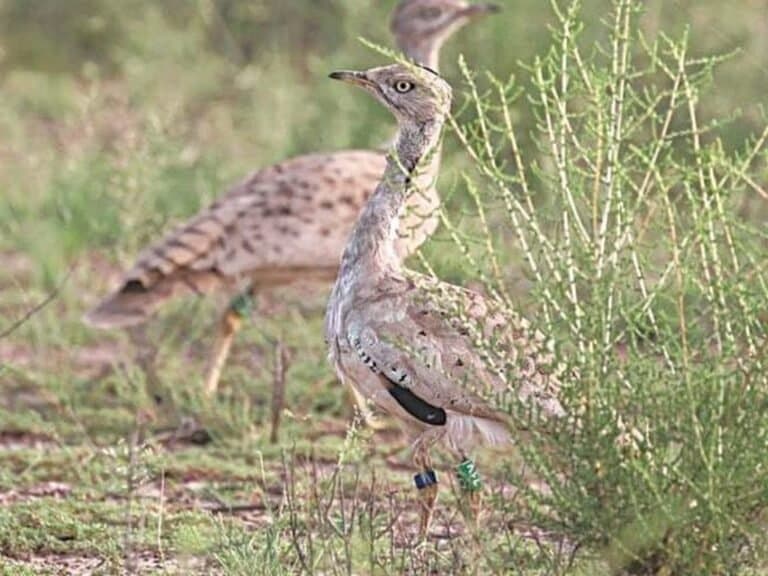
The Asian houbara, also known as MacQueen’s bustard, is a large desert bird listed as Vulnerable on the International Union for Conservation of Nature (IUCN) Red List. It is a partial migrant: birds from northern breeding grounds winter further south, including in Pakistan, mainly in western Balochistan, arriving between October and December and leaving in mid to late March.
In Pakistan the bird is known as the tiloor. Hunting of the Houbara bustard has long been a subject of debate. In September 2015, the Supreme Court told governments to stop issuing hunting licences for the bird; in January 2016, a five-judge bench lifted that ban on review petitions from the federal and provincial governments, which had argued that regulated hunting helps conservation.
The account of the meeting did not state hunting dates, permit numbers or the nationalities of hunters, and none of those details were given in the official account. What is clear is that the bird’s protected status will change only once the decision is formally communicated and the legal process, including the gazette notification, is completed.
Until that process is complete, the Houbara bustard remains in the Third Schedule and protected throughout the year. The wildlife department will now move to complete the formalities so that the temporary transfer to the First Schedule can take effect for the approved hunting period.
Related Coverage