


ADاشتہار / AdvertisementGoogle Ad
Islamabad Special Status, Boundary Expansion ProposedPakistan
A new model for the federal capital would put the mayor in charge and add 25 to 30 elected members, while boundary changes could bring in areas from Haripur, Rawalpindi and Murree’s NA-51.
Share:
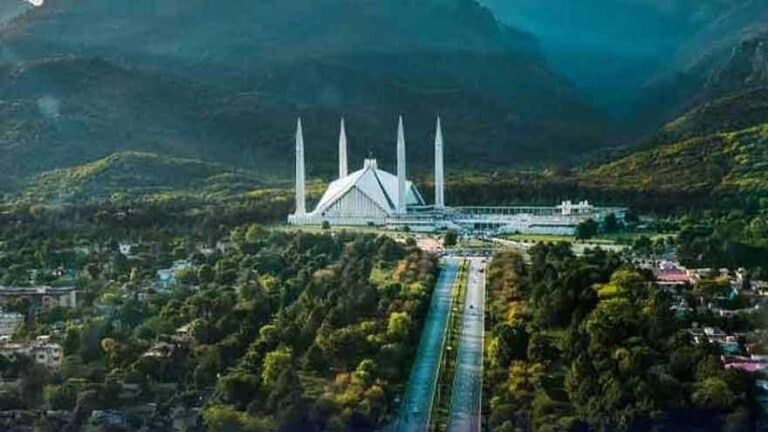
The government has started preparations to grant Islamabad a special administrative status, while a proposal to expand the capital’s geographical boundaries is also under consideration, Dunya News reported on Sunday.
According to sources, a new administrative model has been drafted for Islamabad, proposing to grant the capital a special status or transform it into a model administrative unit.
ADاشتہار / AdvertisementGoogle Ad
Under the proposed plan, the mayor would serve as the administrative head of Islamabad, while the number of elected members of the proposed administrative unit is expected to range between 25 and 30, the report said.
Sources said the plan also envisages expanding the geographical boundaries of the federal capital. Proposals are being considered to incorporate parts of Haripur district in Khyber Pakhtunkhwa, certain areas of Rawalpindi, and localities falling within National Assembly constituency NA-51 in Murree district into Islamabad.
However, details of the final decision regarding the proposed administrative model and changes to the capital’s geographical boundaries have yet to emerge, according to the report.
The new proposal follows an earlier draft unveiled by the Planning Ministry in September, which recommended turning Islamabad into an autonomous federal unit governed by a 27-member elected assembly. Under that draft, 21 members would be directly elected, five seats would be reserved for women and one for minorities, and the capital’s administration would run through 27 departments, Voice PK reported at the time.
Under the September draft, law and order and master planning would remain under federal control, while most other governance would be handled by the elected assembly. The assembly would elect its leader, titled either chief minister or mayor, as the chief executive of the Islamabad government, and the changes would be enacted through a single law, the Islamabad Capital Territory Government Act 2026.
Separately, in January the federal cabinet approved a restructuring of Islamabad’s local government under which the Metropolitan Corporation Islamabad would be replaced by three town corporations, one for each of the capital’s three National Assembly constituencies. Each town corporation would have one mayor and two deputy mayors, indirectly elected by union council chairmen, serving four-year terms, according to reports.
Under that restructuring, powers currently held by the Capital Development Authority would be transferred to the town corporations in phases, and the mayors would be given authority over municipal finance, drainage systems and development projects.
The latest proposal, with a single mayor as administrative head and 25 to 30 elected members, appears to be a distinct model from both the September assembly draft and the January town-corporation plan, and it was not immediately clear from the report how the three approaches relate to one another.
Islamabad’s governance structure has been debated for years, with local government elections in the capital repeatedly delayed. Any change to the capital’s status or boundaries would require approval at the federal level, and no timeline for a decision was given in the report.
Related Coverage