


ADاشتہار / AdvertisementGoogle Ad
Sheshnag Lake Row: BRO Defends Track Work After OutcryKashmir
Political leaders, religious figures and environmentalists have demanded a halt to machinery operating near the glacial lake, while the Border Roads Organisation insists its post-pilgrimage track work follows safety and environmental norms.

Share:
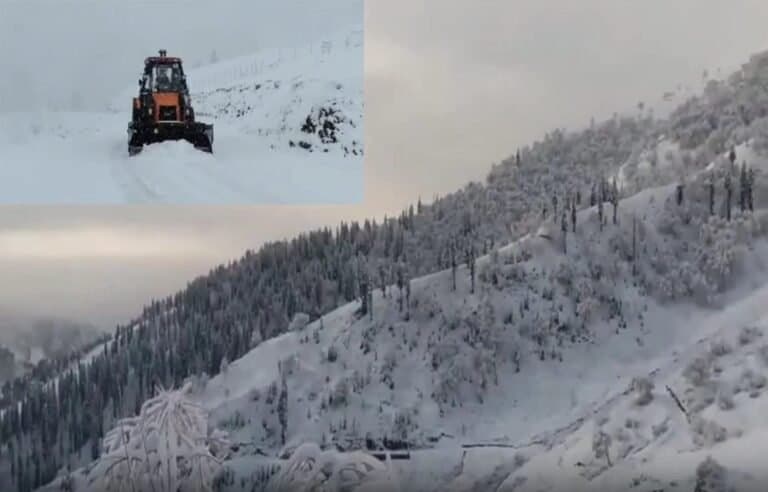
A video circulating on social media has triggered a sharp row over construction activity near Sheshnag Lake in the upper reaches of Pahalgam, after footage purportedly showed a JCB excavator carrying out earthwork beside the high-altitude glacial lake. The video, which spread widely on Monday, 23 November, also appeared to show excavated soil being dumped along the lake’s shoreline, drawing condemnation from political leaders, religious figures and environmental activists.
Sheshnag Lake sits at an altitude of around 3,590 metres above sea level on the traditional Pahalgam route to the Amarnath Cave shrine. The glacier-fed lake measures about one kilometre in length and 0.7 kilometres in width, and is reached through an approximately 23-kilometre trek from Chandanwari. The surrounding region remains covered in snow for most of the year and is considered ecologically sensitive. The video was first shared on Instagram by an account named ‘Neeraj_excavator-lover’ and was later deleted, but continued to circulate on other platforms.
ADاشتہار / AdvertisementGoogle Ad
Peoples Democratic Party spokesperson Mohit Bhan described the activity as “a crime against Hinduism and faith in nature”, calling Sheshnag a sacred landscape where, according to Hindu belief, Lord Shiva left behind the serpents before proceeding to the Amarnath Cave. He said faith and ecology both demanded protection. Former chief minister and PDP president Mehbooba Mufti warned that unchecked infrastructure work in fragile alpine areas could push Kashmir towards a disaster like Uttarakhand, and pointed to recent glacial lake outburst floods in Nepal as a warning.
Mirwaiz Umar Farooq, Kashmir’s chief Muslim cleric, called for an immediate halt and sought accountability from the administration, saying Kashmir had always welcomed Amarnath pilgrims, but that better facilities should not come at the cost of shrinking glaciers and alpine water bodies. “Our precious mountains, glaciers and water bodies need protection, not plunder,” he said. Former MP Aga Ruhullah and Anantnag MP Mian Altaf Larvi also called for the digging to stop, while environmental activist Raja Muzaffar Bhat questioned how heavy machinery was being brought into the region’s glacier areas.
BRO says work is limited to existing tracks
The Border Roads Organisation (BRO) responded on 23 November, saying it was carrying out post-Amarnath Yatra works in compliance with all applicable safety norms and environmental safeguards. It said claims in the circulating video about new works were incorrect, and that the work involved widening existing tracks based on experience from previous pilgrimages, stabilising vulnerable stretches to ease congestion and allow safer passage. “The works are confined to the existing tracks,” the organisation said, adding that its primary objective was to safeguard pilgrims. It said it took measures to ensure the safe disposal of excavated material, protect natural drainage and minimise disturbance to the surrounding terrain.
The statement did not name Sheshnag Lake, nor did it say whether environmental clearance or a risk assessment had been obtained for work near the lake, reportedly among 14 high-risk glacial lakes in Jammu and Kashmir. Communist leader M. Y. Tarigami said the government must immediately stop any work that threatened the lake, warning that Sheshnag was surrounded by loose moraine and steep slopes, with risks extending to people downstream, including Pahalgam and areas along the Lidder river. He also demanded that the authorities make public the details of the project, the agency carrying it out and the clearances obtained.
Related Coverage


